

Olympic Lifting and the Other Things
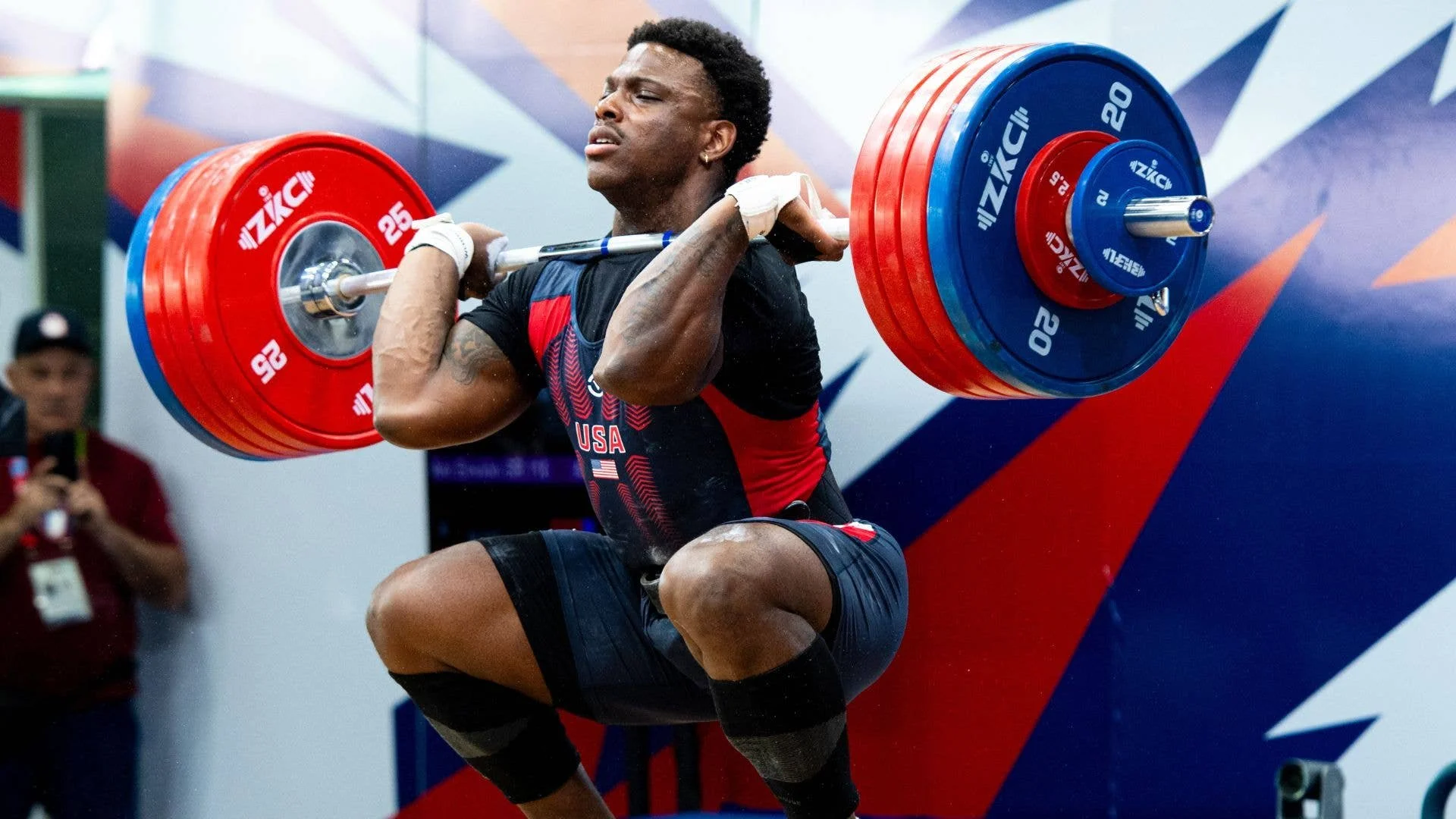
*Image from Men’s Journal
When we talk about Olympic Lifting, what are we actually talking about?
What you see in the Olympics is called “Weightlifting.” But yes, it is more commonly referred to as Olympic Lifting. This particular event features two specific lifts, technically three from a technique standpoint.
The Snatch - Arms WIDER than shoulder width, and the barbell is scooped up in one fast, explosive motion until the bar is over your head from a squat position, and then stand up. With the bar still over your head….Seems fun? Yeah, except the risk of smacking the bottom of your jaw with the bar, scraping your nose, or over producing force and the bar winds up behind you.
The Clean and Jerk - From an almost deadlift position with arms slightly wider, but maybe not shoulder width apart - the bar comes off the floor into the hips, and is caught at the bottom of a squat position with arms catching the bar as if it were a front squat. After that stand up, reset, and in a heaving, pushing motion, the bar gets ‘pressed’ above the head, with the final catch being in a split squat or a squat position.
Now, there are several more details to these two lifts, but this blog is not about the step by step process of the movements. But, we are going to talk about it.
So, why are these lifts featured in the Olympics? They are so so so technical in their mechanics, and require a lot of time to be almost perfect and to increase weight and strength. These lifts are the perfect combination of force, speed, power, strength, coordination, mobility, and yes, sometimes reaction time. If the bar slips out, you have to react to get out of the way.
An entire periodized program is designed around these two/three specific movements. That is the entire goal, to be the best version of yourself in these lifts and to continuously move more and more weight. Because of the time it takes to learn these movements, they often do not show up in a traditional exercise routine with a personal trainer. That can change with a few simple words.
“Can we weight lift?”
“OH MY LANTA YES! I thought you would never ask.”
Ok, if it is that simple, why don’t we do these lifts with everyone? It seems so functional, and complex, and works every part of the body in a short amount of time. Well, like I said before. It takes time. It takes practice, discipline, and no shortage of muscle soreness, and A LOT OF mobility work. I am of the train of thought that technique, form, and movement quality take precedence over anything else. Like speed of the movement (granted that is part of the technique) or weight progression for the sake of ‘weight progression’ should not be the markers of displaying ‘improvement.’
Anyone who has practiced a few times is going to get faster in the lifts. Speed doesn’t always dictate proper form. Slow down and reset once in a while. If these lifts go bad, they GO BAD.
Talking the other side here of lifting mechanics and exercise selections. Powerlifting is the other term I have heard where people believe it is the Olympic lifts (weightlifting).
No.
Powerlifting events, or powerlifting movements is made up of three dedicated lifts
Back Squat
Bench Press
Deadlift
OOHHHH, right. Unlike weightlifting, these three movements are based on absolute force production and power. Technique is still very much important, however, it is easier to learn and progress in these three movements because there are less mechanics to worry about.
Holy shit, I am boring myself with my writing. I apologize (but not really, iykyk - WOW).
Point of the story (blog) - Why do we train more powerlifts than we do Olympic Lifts? Great questions! It comes down to goals, time, and money. If you want to pay us for an hour to teach, and focus on one lift at a time, we can absolutely do that! However, the real question would be if that is the best choice for your overall goals. In busy schedules, we are trying to be the most efficient with your time. That typically means a full body program, focusing on multi-plane motions targeting all different joints.
But, if mixing up your program is something you want to do, talk to your coach about incorporating some Olympic lifting progressions or reach out to the SomaVT team to get started. The real question too would be “why not?” Well, hopefully your coach also has that answer for you.
